


Sightbeginswith light. — Dr. Sahel Soltani
Ophthalmologist and Eye Surgeon, ICO Tabriz
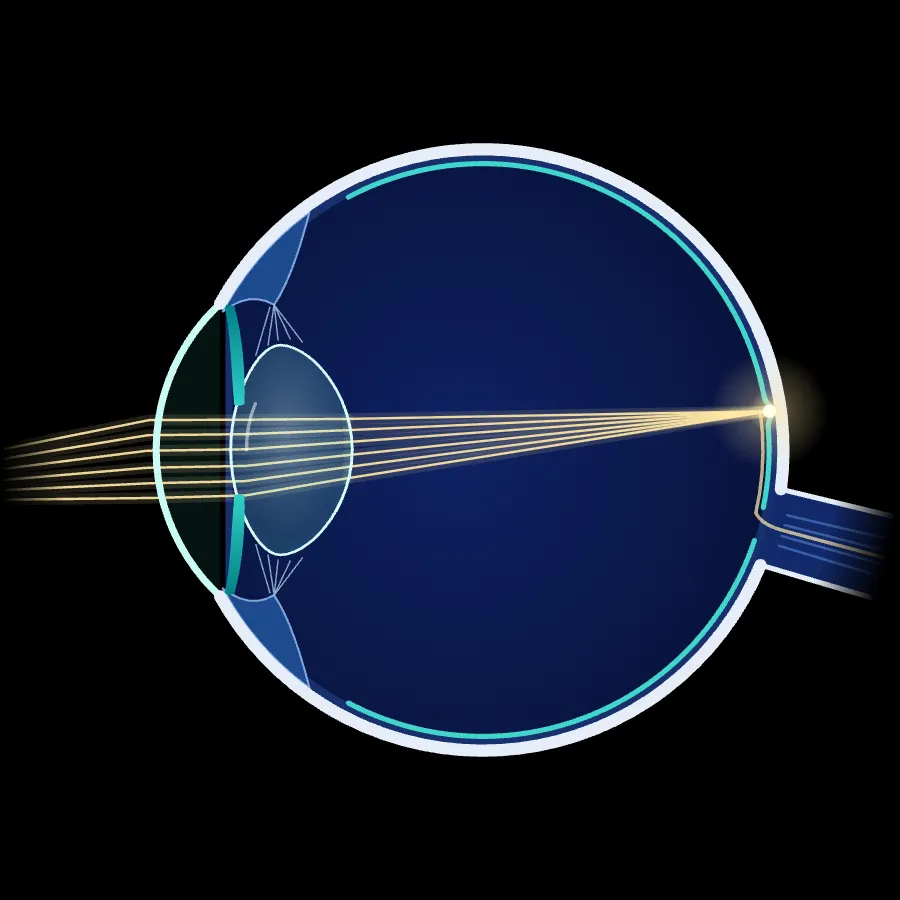
Light passes through the cornea and lens, lands on the retina and reaches the brain along the optic nerve. Wherever the trouble lies on that path, finding it comes first.
First, find where on the path the problem is.
Dr. Sahel Soltani is an ophthalmologist and eye surgeon in Tabriz. "My sight is blurry" can come from a dry eye surface, a clouding lens, your prescription or the retina. That is why treatment starts with an examination that shows where the problem is. This site helps you see which part of the eye your complaint relates to, when not to wait for an appointment, and what to bring to the first visit.
More about the doctorFrom the cornea to the optic nerve, in plain language.
These pages explain what each part of the eye does, what can go wrong and how treatment generally goes. Your diagnosis and plan are set by the doctor after an examination.
The lens and cataract
The clear lens of the eye slowly clouds with age. Hazy sight, faded colours and glare at night are the signs. Most of the time there is no hurry, and how much it affects daily life decides when to operate.
Read moreThe cornea and eye surface
The cornea does most of the bending of light, so even a small problem there affects sight. From dry eye to keratoconus, and the ulcers that should not wait.
Read morePrescription and presbyopia
Short sight, long sight, astigmatism and trouble reading after forty. Who glasses, lenses and surgery each suit, and what not to expect.
Read moreThe retina and macula
The retina is where light becomes a nerve signal. Damage from diabetes, macular problems, floaters and retinal tears, and the signs to have checked the same day.
Read moreThe optic nerve and glaucoma
Glaucoma usually progresses silently and takes side vision first. Lost sight does not come back, but early diagnosis and regular treatment can often stop further damage.
Read more
From "my sight is blurry" to a clear decision
One simple complaint can come from several parts of the eye. These five steps find where the problem is, and then you decide together what to do about it.
- Step 1 of 5.
Your complaint and a vision check
You are asked what has changed and since when. Then each eye is measured on its own and your prescription is checked. Bring your glasses, drops and earlier prescriptions.
- Step 2 of 5.
Examination, front to back
A special microscope shows the cornea and lens, and the eye pressure is measured. If needed, dilating drops let the doctor see the retina and optic nerve. Vision stays blurry for a few hours, so do not drive yourself.
- Step 3 of 5.
Only the tests you need
Depending on the problem you may need OCT, a visual field test, a corneal map or measurements for a lens implant. Not every patient needs all of these.
- Step 4 of 5.
A shared decision
Sometimes glasses, drops or monitoring are enough, and sometimes laser or surgery is suggested. You hear the benefits, the risks and the alternatives, and you ask your questions. You decide together.
- Step 5 of 5.
Treatment and follow-up
Using your drops regularly and keeping scheduled visits are part of treatment, even when the eye seems fine. Go over the urgent signs before you leave the office.
With you at every stage of diagnosis, treatment and follow-up.
The patient support form has six sections: laboratory, imaging, pharmacy, referral to doctors, rehabilitation and wellbeing, and services at home.
Medical diagnostic laboratory
Quick appointments and quick results.
Medical imaging and ultrasound
CT scan, MRI and specialist ultrasound.
Pharmacy and specialty medicines
You write the name of the pharmacy on the form.
Referral to specialists and sub-specialists
You write the name of the doctor or the specialty you want on the form.
Rehabilitation and wellbeing
Quick appointments and referral to rehabilitation and wellbeing specialists, arranged by the support team.
Treatment and rehabilitation at home
Specialist treatment and rehabilitation services at home.
Wherever the form says "free", that service is free.
What has changed in your sight?
Tap what you are facing to reach the right explanation. This list is not a diagnosis; it only takes you to the right page.
- Hazy sight and glare
- Burning, dry eyes
- A prescription that keeps changing
- I hold print further away
- Thinking about laser surgery
- I have diabetes
- Straight lines look bent
- Floaters and flashes
- Glaucoma in the family
- My eye pressure is normal
- Using eye drops properly
Sudden loss of sight, flashes with many floaters or a curtain-like shadow, severe eye pain with nausea, a hard blow to the eye and chemical splashes do not wait for an appointment. Go to the emergency department at once or call 115. When should I act at once?
Plain answers to the first questions.
Does a cataract have to be operated on soon?
In most cases, no. A cataract is rarely urgent, and surgery is usually suggested when it makes reading, driving or daily tasks hard. Until then, better lighting, new glasses and anti-glare sunglasses can help. No drop or medicine removes a cataract.
Does cataract surgery hurt?
It is usually done with numbing drops or an injection. You stay awake but should not feel pain. It takes about 20 to 45 minutes and most people go home the same day. The eye may ache for the first few days.
My eye pressure is normal. Does that mean I do not have glaucoma?
Not necessarily. In one type of glaucoma the optic nerve is damaged even with normal pressure, and early glaucoma usually has no symptoms. Diagnosis needs a full examination, not just a pressure reading.
Are floaters dangerous?
Most floaters come from normal age-related changes in the gel inside the eye. If they appear suddenly or increase, or you see flashes or a shadow, have your eye checked the same day, because it may be a sign of a retinal tear or detachment.
How often do I need an eye exam with diabetes?
Most people with diabetes need a full dilated exam at least once a year, even if they see well, because early retinal damage has no symptoms. In pregnancy, or once there is damage, exams are closer together.
Can I have laser surgery for my prescription?
It depends on a stable prescription, the thickness and health of the cornea, and the overall health of the eye. Keratoconus, severe dry eye and a prescription that is still changing are common reasons it is not suitable. If you are happy with glasses or contact lenses, you do not need surgery.
Is rubbing my eyes harmful?
Frequent rubbing is linked with keratoconus and further weakens a thinned cornea. If itching bothers you, have the cause, such as allergy, looked at instead of rubbing.
Can I wear contact lenses with a red, painful eye?
No. Take the lens out and call an eye doctor the same day. Redness, pain, light sensitivity or discharge in a lens wearer can be a sign of a corneal infection.
Which operations does the doctor perform personally?
The list of procedures and where they are done will be announced after the doctor confirms it.
Do you accept insurance?
The list of contracted insurers will be announced soon.
What does ICO mean in the doctor's title?
An explanation of this title will be added once the doctor confirms it.
These answers are general and do not replace your doctor's advice for your situation.
To begin: a full eye examination.
Go to the booking page or talk to the support team. Have your glasses, drops and earlier results ready.
Support number